
Balanced nutrition, field relevance and export positioning
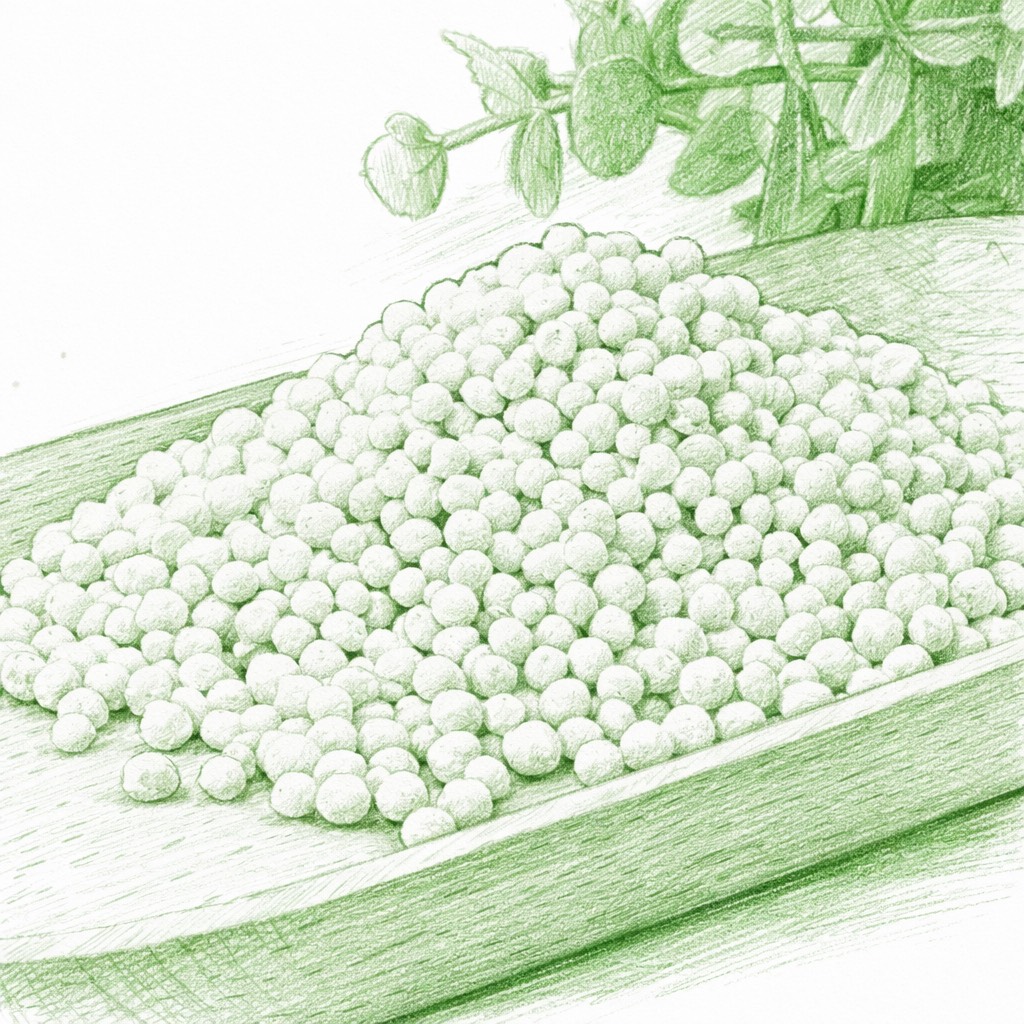
NPK 16:16:16 is a balanced granular compound fertilizer designed for modern field application, dependable spreading, and export supply. Its guaranteed analysis is 16% total nitrogen (N), 16% phosphorus expressed as P2O5, and 16% potassium expressed as K2O. Every 1,000 kg of product supplies 160 kg N, 160 kg P2O5, and 160 kg K2O, for a total of 48% primary nutrients. Compared with NPK 15:15:15, this grade delivers an additional 10 kg of each primary nutrient per tonne in the same spreading pass. In true compound production, each granule contains the intended N-P-K ratio, which supports more uniform nutrient distribution and reduces segregation during handling and storage.
A commercially strong 16:16:16 formula starts with agronomic targeting: crop requirement, soil condition, irrigation regime, and the guaranteed analysis expected by the buyer. Raw materials are chosen not only to reach the declared nutrient ratio, but also to support stable granulation, good flowability, and reliable storage performance. Potassium source selection is especially important. Potassium sulfate is often preferred where additional chloride should be limited, because it supplies potassium without chloride and is well suited to situations where chloride additions should be avoided in certain soils and crops.
One established industrial route for compound fertilizer production is the nitrophosphate process. In this route, phosphate rock reacts with nitric acid, and the excess calcium is converted to calcium nitrate instead of gypsum. Across compound-fertilizer routes, manufacturers then move through the core finishing stages of granulation, drying, screening or crushing, cooling, and coating to produce uniform particles with good handling and spreading characteristics and low dust.
For market positioning, NPK 16:16:16 fits the main crop systems of both Central Asia and Europe. In Uzbekistan and the wider Central Asian context, official and multilateral sources show strong production in cotton, grain crops, vegetables, melons, fruit, potatoes, and irrigated cereals such as wheat, maize, and rice. That makes this grade a practical foundation fertilizer for cotton, wheat, maize, vegetables, potatoes, and orchard crops. In Europe, the crop profile is equally compatible: cereals, rapeseed, sunflower, potatoes, sugar beet, vegetables, and grapes for wine occupy major production volumes and fertilized areas across the EU.
In field practice, NPK 16:16:16 is commonly used as a basal or pre-sowing fertilizer. Placement near the root zone can improve early phosphorus access, especially in soils with low phosphorus availability. At the same time, fertilizer bands should not be placed too close to seed, because salt and ammonia injury can reduce emergence and early growth. Proper placement helps young plants access phosphorus at the stage when root establishment is most critical.
Over the longer term, balanced N-P-K nutrition helps support more stable crop establishment, stronger root development, more even vegetative growth, and better stress management. Nitrogen supports leaf and stem growth, phosphorus supports root and seed development, and potassium helps regulate nutrient movement and water relations within the plant. The strongest long-term result comes when a balanced fertilizer such as NPK 16:16:16 is integrated into site-specific nutrient management and 4R stewardship: right source, right rate, right time, and right place.
For professional buyers and European intermediaries, product quality is judged not only by chemistry but by consistency and documentation. SAM FOS can position NPK 16:16:16 as an export-ready granular compound fertilizer supported by batch Certificates of Analysis, traceability, stable granulation, and professional shipment preparation. For EU sales, the regulatory wording should remain precise: Regulation (EU) 2019/1009 governs EU fertilising products, CE-marked products can follow that harmonised route, and non-harmonised fertilising products may still be placed on the market under applicable national legislation.